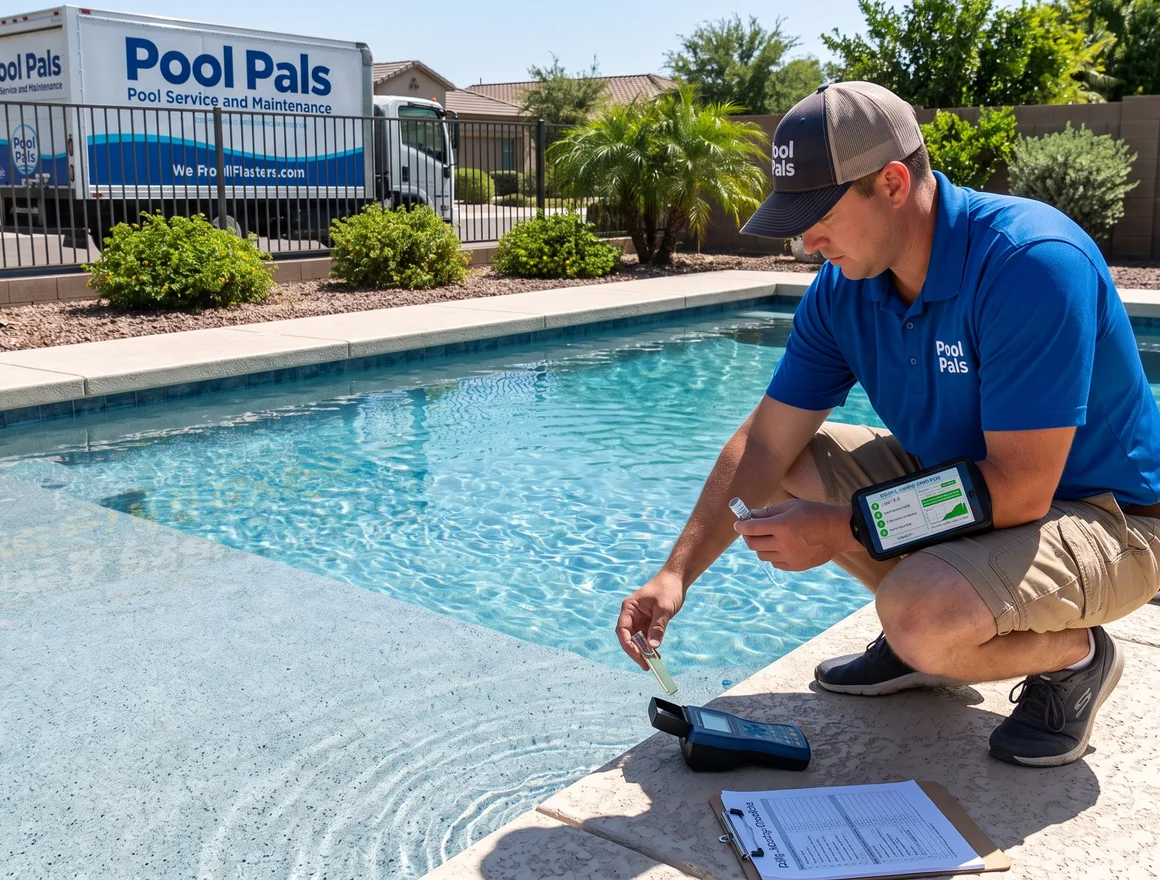
Every Week
- Skim the surface with a leaf net to remove debris before it sinks
- Empty the skimmer basket — a clogged basket reduces water flow and puts strain on your pump
- Test pH and free chlorine: aim for pH 7.2–7.6 and chlorine 1–3 ppm
- Check water level and top up if it's dropped — evaporation is significant in Auckland summer, and low water can expose the skimmer and damage the pump
- Quick visual inspection of the pump and equipment — listen for anything unusual, check for drips or leaks
Weekly testing is the single most important thing you can do for your pool. If you do nothing else on this list, do this. The reason is simple: water chemistry shifts are cheap to fix early and expensive to fix late. A pH drift caught during your weekly test costs $5 in pH adjuster. The same drift left for three weeks — while algae quietly establishes itself — can cost $150–$200 in shock treatment, algaecide, and your own time. Consistent weekly testing is genuinely the best investment you can make in your pool.
Every Fortnight
- Vacuum the pool floor — set the valve to "filter" for routine cleaning, or to "waste" if you've had any algae issues recently (this bypasses the filter entirely and removes debris straight to drain)
- Brush the walls, steps, and tile line — algae almost always starts at the waterline before you can see it anywhere else, and a quick brush disrupts it before it takes hold
- Check the filter pressure gauge — if it reads 8–10 psi above its normal operating pressure, it needs cleaning; a dirty filter can't do its job properly and forces the pump to work harder
- Inspect the pump for any signs of leaks around the lid or fittings, unusual noise, or a noticeable loss of suction
Every Month
- Deep clean the filter: if you have a sand or DE filter, backwash until the water running to waste is clear, then rinse; if you have a cartridge filter, remove the cartridge and rinse it thoroughly with a hose
- Test total alkalinity (aim for 80–120 ppm) and calcium hardness (200–400 ppm) — these two parameters are what give your pH stability; without them in range, pH bounces around no matter how often you adjust it
- Check salt level if you have a saltwater pool — 3,000–4,000 ppm is the ideal operating range for most salt chlorinators
- Inspect the salt cell for calcium scale buildup — a visual check takes about thirty seconds; descale if you can see white deposits forming on the plates
These monthly checks are what most people skip — and they're also what separates a pool that's a genuine pleasure to own from one that becomes a constant headache. Total alkalinity and calcium hardness aren't exciting numbers to test, but they're the foundation that everything else rests on. Get these right and your day-to-day chemistry becomes much more stable and predictable. Ignore them and you'll spend twice as much on chemicals chasing a pH that won't hold.
Seasonal — Summer Prep (September–November)
- Shock treat the pool before the season really kicks off — winter allows low-level chlorine demand to build up, and a good shock at the start of spring clears the slate
- Service all equipment before it's working hard: check the pump impeller for debris, inspect your automatic pool cleaner for worn tyres or hoses, and run the heater through a test cycle if you have one
- Adjust your filter run time upward — 8–10 hours per day is the right target in peak summer; the extra bather load and UV intensity mean your water needs more turnover
One thing Auckland pool owners need to account for that's not always on the radar: UV. New Zealand has some of the highest UV index readings in the world — Auckland regularly hits UV 11 or 12 on clear summer days. This matters a lot for pool chemistry because UV degrades free chlorine faster than almost any other factor. On a clear December afternoon, a well-dosed pool can lose a significant chunk of its free chlorine within just a few hours. The answer is stabiliser (cyanuric acid), which acts like sunscreen for your chlorine and dramatically slows that degradation. Aim for 30–50 ppm. Just don't let it creep above 80 ppm — at that level, stabiliser starts actively reducing chlorine's effectiveness, which creates its own problems.
Seasonal — Winter (May–August)
- Reduce frequency — but don't stop entirely; algae still grows in cooler water, just more slowly, and a neglected winter pool can come back to life as a swamp in spring
- Run the filter at least 4–6 hours per day even in winter; the water still needs to turn over regularly to stay clear
- Keep chemicals balanced at lower levels — you don't need the same chlorine residual as summer, but you do need some; 0.5–1 ppm free chlorine is a reasonable winter floor
- Use a pool cover if you have one — this is probably the single highest-impact thing you can do over winter, dramatically reducing chemical consumption, evaporation, and debris accumulation
- Check on the pool at least every two weeks, even if you're not swimming; a quick look at the water colour and a test of the basics takes ten minutes and can save you from an unpleasant spring surprise
Not up for all this yourself? Honestly, most Pool Pals customers started out DIY-ing their pool care — and called us when life got busy. No judgment. That's exactly what we're here for.
Want us to handle this for you?
Pool Pals takes care of the whole routine — weekly or fortnightly, basic chemicals included, with a report after every visit.
View our regular maintenance service